
When you support the ALS Network, you ensure that our mission is carried out in the following key areas:
Local ALS Care Services
Sharalyn was diagnosed with ALS in August 2020. A trained Theologian, she has walked people through life-changing events. Now she shares, “I have to walk my talk.” Watch this video to learn more about Sharalyn’s story and how the ALS Network has connected her to support, equipment, and resources.
Learn More About the ALS Network's Compassionate and Professional Care
The ALS Network is committed to connecting every person facing ALS throughout California and Hawaii to every single possibility that can help them to enjoy a longer, more comfortable, more meaningful, and more dignified life.
The ALS Network’s team of professional Care Managers provide expert advice and assistance for people living with ALS, free of charge. Each person with ALS who registers with ALS Network is connected to a professional Regional Care Manager with extensive knowledge of ALS and local resources. We are here for everyone facing this disease. Our compassionate Care Managers are available to help maximize health, independence, mobility, safety and communication.
The ALS Network offers a unique wraparound model of care combines fully coordinated, individualized medical care with essential community-based care services, all at no charge to the ALS community. Those living with ALS, including all members of the household, have access to professional care management, multidisciplinary clinical care, community resources, support groups, equipment loans, direct assistance grants, community outreach activities, educational events, ALS awareness and advocacy activities, research opportunities, and more. Care services are designed to help people live longer and better with ALS and to accelerate the search for cures.
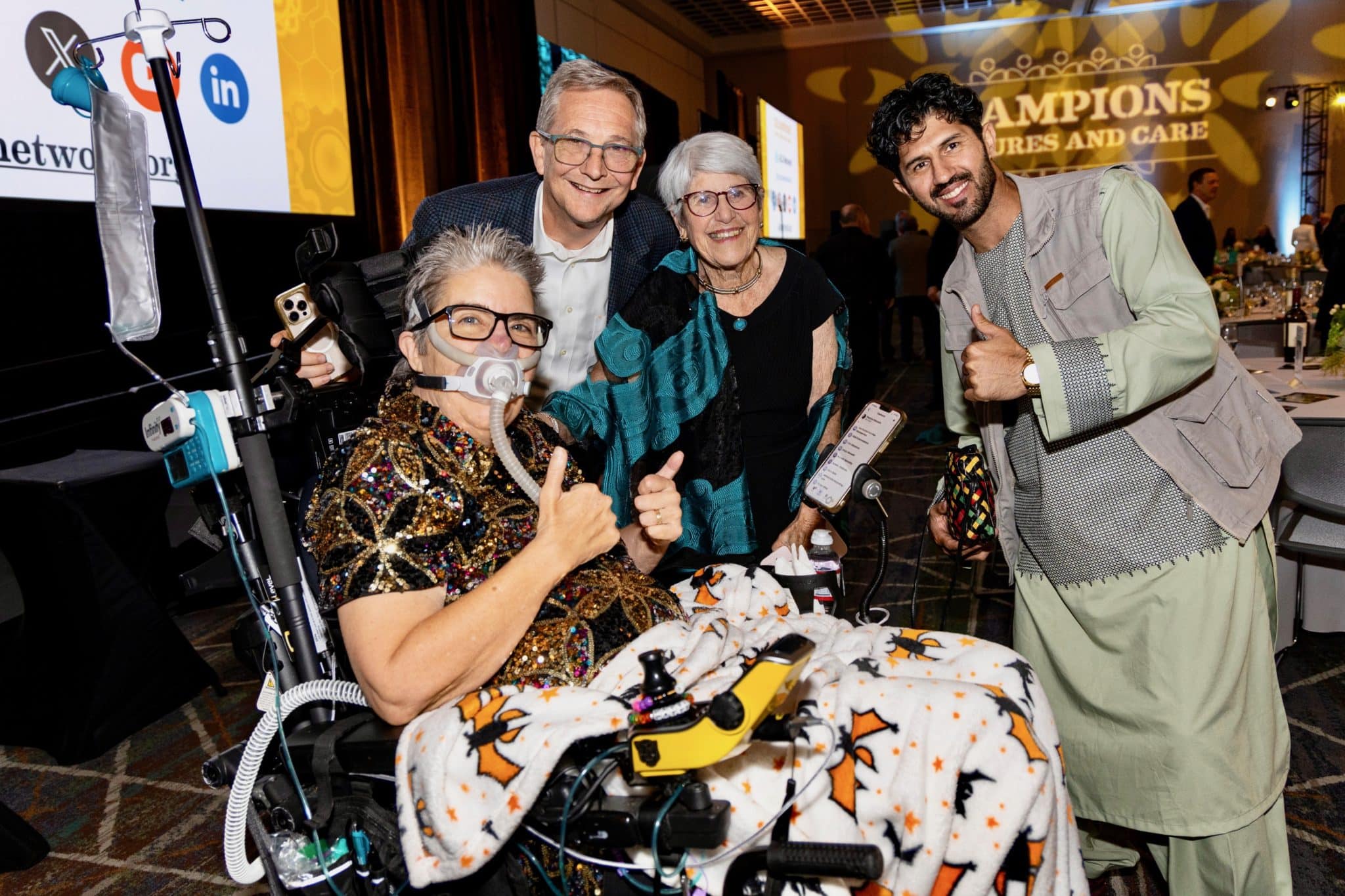
After ALS took her ability to speak, Patti Hancock refused to let it take her voice.
Learn More About Patti's Story
Born in Sacramento, CA, Patti was raised by parents who valued education and taught her perseverance and determination. At age 12, she sustained painful injuries and broken bones after falling off a cliff. Not wanting to give up on her future, Patti learned how to run again and pushed herself to participate in a half marathon with her mom.
“At first I couldn’t feel my legs, but after contemplation, I realized you could still lead a worthwhile life regardless if you humbled yourself to accept it and found a different path,” Patti remembers.
After graduating from college with a focus in computer science, she moved to Silicon Valley and met her husband, Jim, while working in software engineering. After having their first child, Amy, who was born with Down syndrome, Patti chose to leave work to care for her daughter. To help Amy communicate, she began immersing herself in different types of therapy and learning sign language, as Amy had limited and unclear speech.
After many years of stress and sedentary lifestyle, Patti and Jim took turns joining Leukemia and Lymphoma Society’s Team in Training. Six months later, Patti found herself running once again and finished her first marathon in San Diego. For 10 years, the pair continued to run marathons with San Jose Fit, and Patti even returned to school to earn a master’s degree in special education. During this time, the Hancock family welcomed two adopted daughters from China, pushing Patti to learn Mandarin and Chinese culture to best raise her children.
When the Covid lockdown occurred in 2020, she decided to take up online American Sign Language (ASL) classes and made several Deaf friends, including her now-caregiver, Ahmad. This led her to apply for and join Ohlone’s Deaf Centered Interpreter Preparation Program. It was during this time where Patti’s first ALS symptoms arose in the form of lightly slurred speech and unusual, uncontrollable tears. After a year of unanswered questions and continuous visits to the doctor, an ER visit introduced Patti to a neurologist who, in February 2024, diagnosed her with ALS.
By this time, Patti and Ahmad communicated fluently through ASL. Learning that Ahmad had cared for his nephew with cerebral palsy, Patti hired him to care for Amy, and later welcomed his family to live with the Hancocks. After her diagnosis, Ahmad became a full-time caregiver for both Amy and Patti. Because of her bulbar onset ALS, Patti is now unable to speak, but because of ASL she can still communicate in real-time independent of devices. Her husband also communicates via sign, having learned via Dr. Bill Vicar’s YouTube ASL classes and hands-on practice at home.
Patti explains, “ALS is not an all or nothing experience; you don’t just show up one day unable to speak, breathe or move on your own. It is more like a video game in which you must master increasingly challenging levels. Keeping your fellow human being with ALS company, especially when communication gets hard, helping with ideas, food, or providing caregivers a break is a huge support, even if you don’t have experience. It means the world to me when people say things like ‘good to see you’ or ‘are you coming next week?’”
Now, Patti continues to face ALS with the same resolve that once carried her through marathons. After connecting with the ALS Network, she has attended the Napa Valley Ride, Walk & Roll to Cure ALS, Champions for Cures and Care, and the Wedemeyer HS All-Star Game. She also regularly attends and watches ALStogether’s online lectures.
Currently, Patti is a client of Forbes Norris ALS Clinic and participates in three sessions a week with the Stanford BrainGate research team. This is the second ALS research project for which she has volunteered for brain surgery. The first was Cedars Sinai Stem Cell Study to grow astrocytes to support motor neurons. Patti is committed to ALS research and the search for a cure, partnering with researchers working to understand the brain’s signals connected to language. Patti’s knowledge of English, ASL, Spanish, and Mandarin has made her BrainGate testing uniquely valuable, with research planned to be conducted across all four languages. Even as ALS affects her ability to communicate, she remains at the forefront of discovering new ways to make communication possible.
“Marathon training has taught me that what may seem impossible to surmount often just takes practice, commitment, and a change in perspective,” she shares. Patti offers this advice, “Read stories like Charlie Wedemeyer’s, Stephen Hawking’s, and join a support group with people whom you can learn from. You are not alone on this journey.”
Advocacy
In this video, recipients of the 2025 Essey Commitment to Care Award, Patricia Schimbor, Esq. and Susan Morris, former Chair and Vice Chair of the ALS Network Board of Directors, share their unwavering commitment to advocacy on both the state and federal levels.
Research
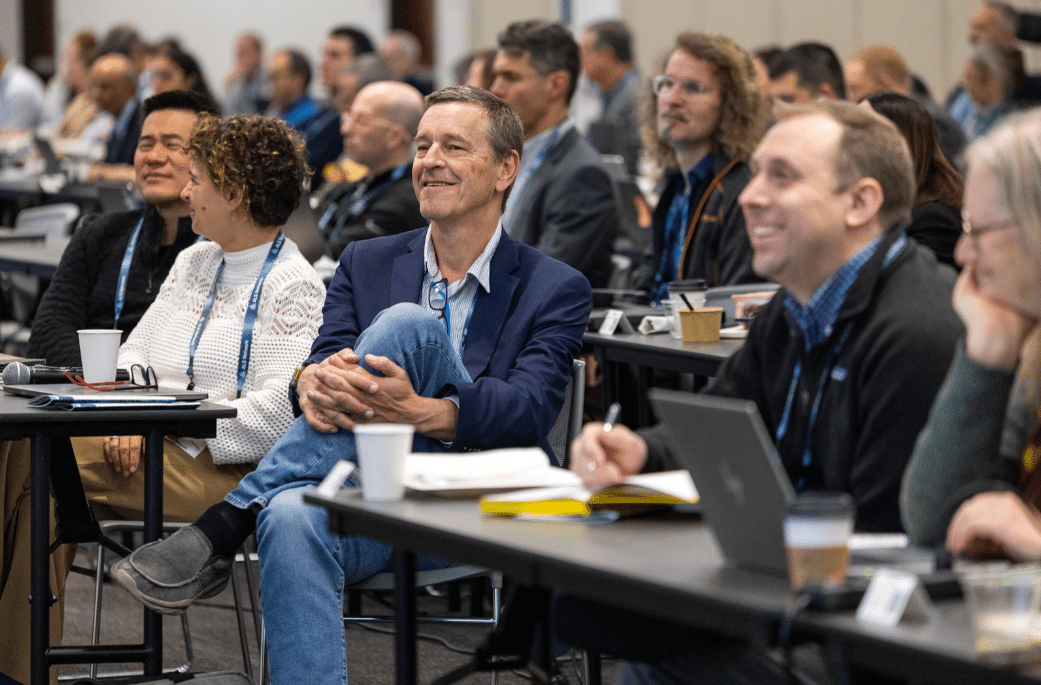
The ALS Network Research Summit was three days the could change the pace of ALS research.
At this year’s ALS Network Research Summit, scientists, clinicians, and industry leaders came together with the shared goal of moving faster toward treatments that work. From biomarker breakthroughs to gene therapy and precision medicine, the conversations went beyond theory. The focus was clear: how to turn promising science into real-world therapies, sooner.
The result was a growing sense that collaboration across disciplines isn’t just helpful, it’s accelerating what’s possible in ALS research.
Learn More About the ALS Network Research Summit 2026
Three Days of Science, Translation, and Momentum
The ALS Network Research Summit brought together leading doctors, researchers, clinicians, and industry partners from across the country to share progress and strengthen work already underway to improve treatments for ALS.
Across three days, speakers highlighted where the field is moving next, including earlier diagnosis, new therapies, assistive communication technology, and better-designed clinical trials. The focus throughout was practical: how to move promising science into real options for people living with ALS.
A major emphasis was collaboration. By convening experts from different disciplines and organizations, the Summit helps connect work that might otherwise remain separate. Those connections often lead to new studies, faster trial design, and more coordinated approaches to care and research.
The ALS Network plays a central role in this process by funding innovation and bringing people together to turn research progress into action. The ideas shared here help guide future investments and priorities, ensuring that promising science continues moving toward meaningful impact for people living with ALS.
Together, we are accelerating the path from discovery to impact.
Clive Svendsen, PhD, a thought leader in the ALS research community, leads a research lab focused on understanding ALS and advancing clinical trials. Watch this video to see his compassion for the ALS community and his optimism for a future cure.
Public Education & Awareness
One example is a video series developed in partnership with Your ALS Guide that focuses on one of the most challenging aspects of daily life with ALS: safely transferring from a bed, chair, or other seated position. These videos offer clear, practical instruction designed to support both individuals and caregivers in moments that can feel physically demanding and uncertain.
When Lorene Lee was diagnosed with ALS in 2010, she and her devoted husband Tony participated in an ALS Walk & Roll to Cure ALS. Because it was the first time they had ever done anything like that, they thought they’d be lucky to raise $1,300. But after participating in the walk seven times, they have raised over $130,000 – providing critical funding for essential care services, public policy initiatives, and leading-edge research. Watch this video to see this loving couple and the power of their love.